TNCC Releases 2025–26 Annual Report
Our 2025–26 Annual Report is now available, and we’re glad to share it with you.
This past year, TNCC and partners moved ecological connectivity work from regional mapping toward implementation-ready planning, while continuing to advance Indigenous-led stewardship, regenerative agriculture, and stronger local government partnerships across the Thompson Watershed and into the North Okanagan.
Highlights from the year
- TNCC’s network grew to more than 60 partner organizations, spanning government, First Nations, stewardship groups, and academia.
- Guided by a First Nations-led Corridors Working Group, 22 ecological corridor concepts were identified and refined region-wide, resulting in 13 emerging corridors for the focus of future work.
- The Keeping Nature Connected campaign reached more than 2.3 million impressions and drove over 9,000 visits to the new microsite.
- The Regenerative Agriculture Working Group completed a Five-Year Action Plan (2026–2030).
- TNCC’s social media following grew 34% and our e-newsletter list grew 29%. Thank you for being part of this growth!
From regional maps to place-based action
Building on six broad-scale connectivity maps completed the year before, TNCC and partners completed multi-species, climate-informed connectivity modelling and brought together 35 participants for the North Thompson–North Okanagan Corridors Workshop in January 2026. Indigenous Knowledge and Nation-led priorities shaped how corridors were identified and refined, and TNCC supported the development of Corridor Action Frameworks with seven participating Secwépemc Nations, reflecting each Nation’s knowledge, priorities, and governance.

Bringing corridors into local planning
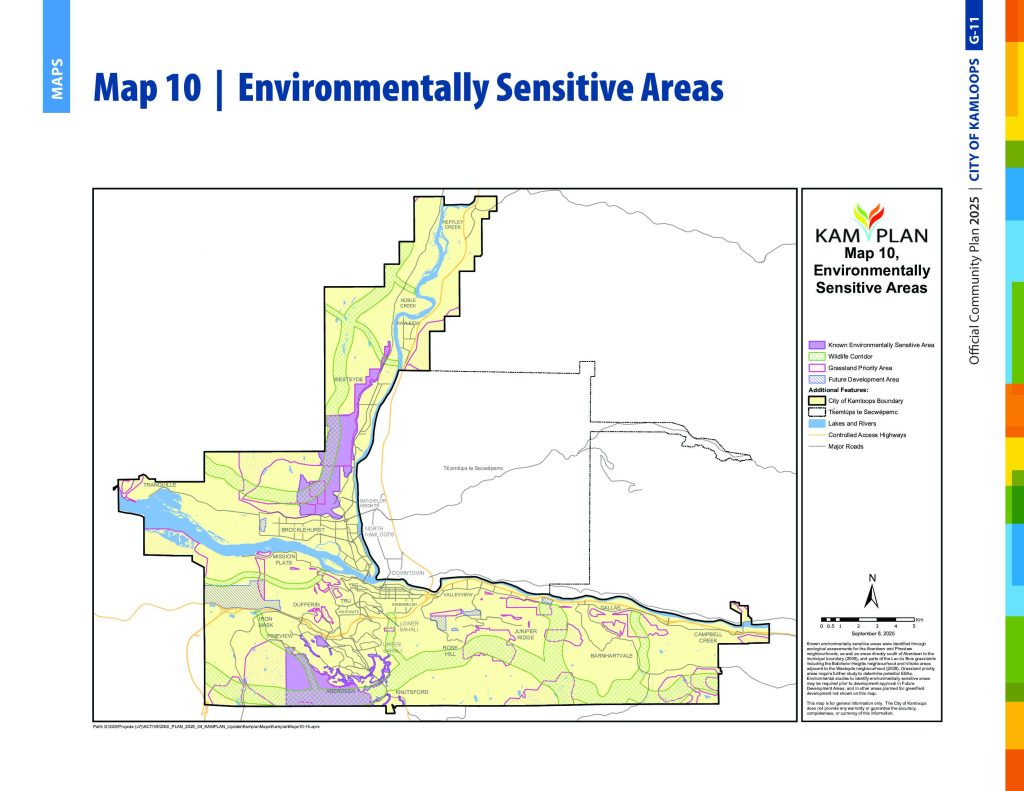
TNCC shared corridor mapping and policy language with local governments across the region. Wildlife corridor considerations were incorporated into the City of Kamloops’ Official Community Plan (KAMPLAN 2025), and mapping was provided to Barriere, Salmon Arm, Chase, and Enderby to support their own planning processes.
Looking ahead
The next phase of work centres on narrowing the 13 emerging corridors to a smaller set of candidates ready for deeper pathway planning, guided by the Corridors Working Group. TNCC and partners will also continue advancing priorities in species at risk, grassland and wetland ecosystems, and regenerative agriculture, while exploring stronger local government planning tools and building community capacity to support First Nations-led decision-making.
Thank you
Thank you to the TNCC Steering Committee, partners, funders, volunteers, and supporters. Your collaboration and expertise made this year’s progress possible.
Read the full 2025–26 Annual Report to see how these efforts came together.