
In Our Backyard: Rusty Blackbird
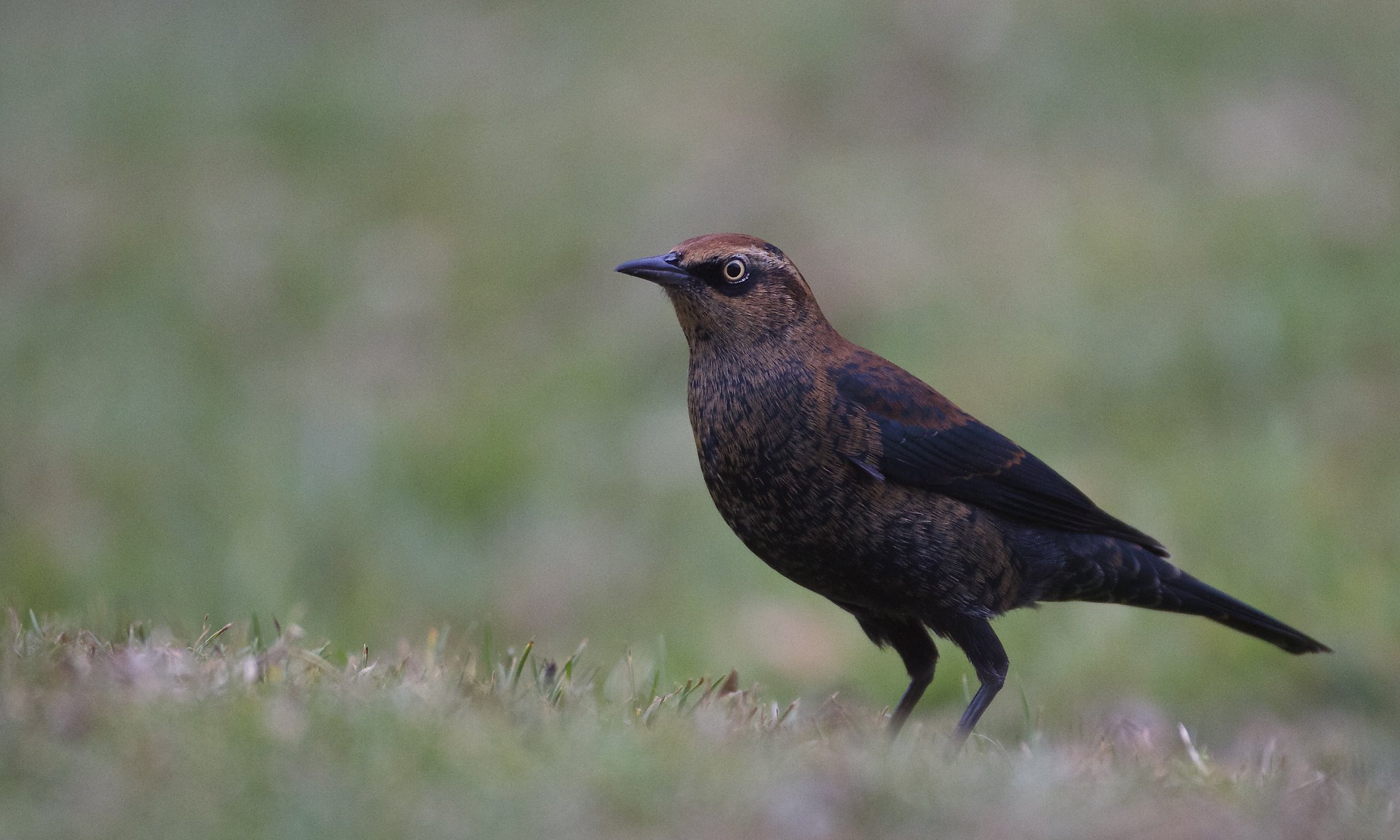
The rusty blackbird (Euphagus carolinus) is a medium-sized songbird that breeds in boreal wetlands across Canada and Alaska and migrates south to winter in the southeastern United States. Once considered common, the species has experienced one of the steepest population declines of any North American songbird, making it a species of growing conservation concern.
Habitat
Rusty blackbirds are closely associated with wetland ecosystems, particularly shallow ponds, bogs, fens, and forested wetlands. During the breeding season, they rely on wetlands with standing water and surrounding trees or shrubs for nesting.
During migration, rusty blackbirds may be found in a variety of wet habitats, including flooded fields, wet meadows, riparian areas, and marsh edges. In British Columbia, they are primarily observed as migrants, passing through in spring and fall.
Within the Thompson–Nicola Watershed, rusty blackbirds are uncommon but may be encountered during migration in wetland-rich areas, especially where shallow water and saturated soils are present. Maintaining healthy wetlands in the region supports migratory birds that depend on these stopover habitats.
Threats
Rusty blackbirds have declined significantly across their range. The primary threats include:
- Loss and degradation of wetlands, particularly on breeding and wintering grounds;
- Changes in hydrology, such as drainage or altered water levels;
- Contamination, including mercury accumulation in wetland food webs; and
- Habitat loss along migration routes, reducing the availability of stopover sites.
Wetland loss and alteration are ongoing concerns across many regions of British Columbia, including the Thompson–Nicola, where wetlands are limited, vulnerable to disturbance, and subject to land conversion.
Conservation Efforts
Conservation efforts for rusty blackbirds focus on protecting and restoring wetlands across their breeding, migration, and wintering ranges. Maintaining wetland connectivity and natural hydrology is important for supporting the species throughout its annual cycle.
In British Columbia, wetland conservation initiatives, stewardship programs, and land-use planning that protect riparian and wetland habitats benefit rusty blackbirds as well as many other wetland-dependent species.
Conservation Considerations
Rusty blackbirds depend on healthy, connected wetlands, particularly during migration when they rely on shallow, food-rich sites to rest and refuel. Maintaining wetland networks across the landscape supports both this species and broader ecosystem function.
Actions that support rusty blackbirds and wetland ecosystems include:
- Protecting wetlands and riparian areas from further loss;
- Maintaining natural water levels and hydrology;
- Reducing contamination that affects wetland food webs; and
- Conserving connected wetland habitats along migration routes.
Community science also plays an important role. Observations shared through platforms such as eBird and iNaturalist help improve understanding of rusty blackbird distribution, migration timing, and habitat use, contributing valuable information for conservation planning.
Learn More
- Government of Canada — Rusty Blackbird (Euphagus carolinus) Species Profile
- Cornell Lab of Ornithology — Rusty Blackbird: All About Birds
- Rusty Blackbird Working Group — Conservation and Research Resources
Feature image: Rusty blackbird (Euphagus carolinus) © Kalin Antonio Ocaña, licensed under CC BY-NC, via iNaturalist.