
In Our Backyard: Black Swift
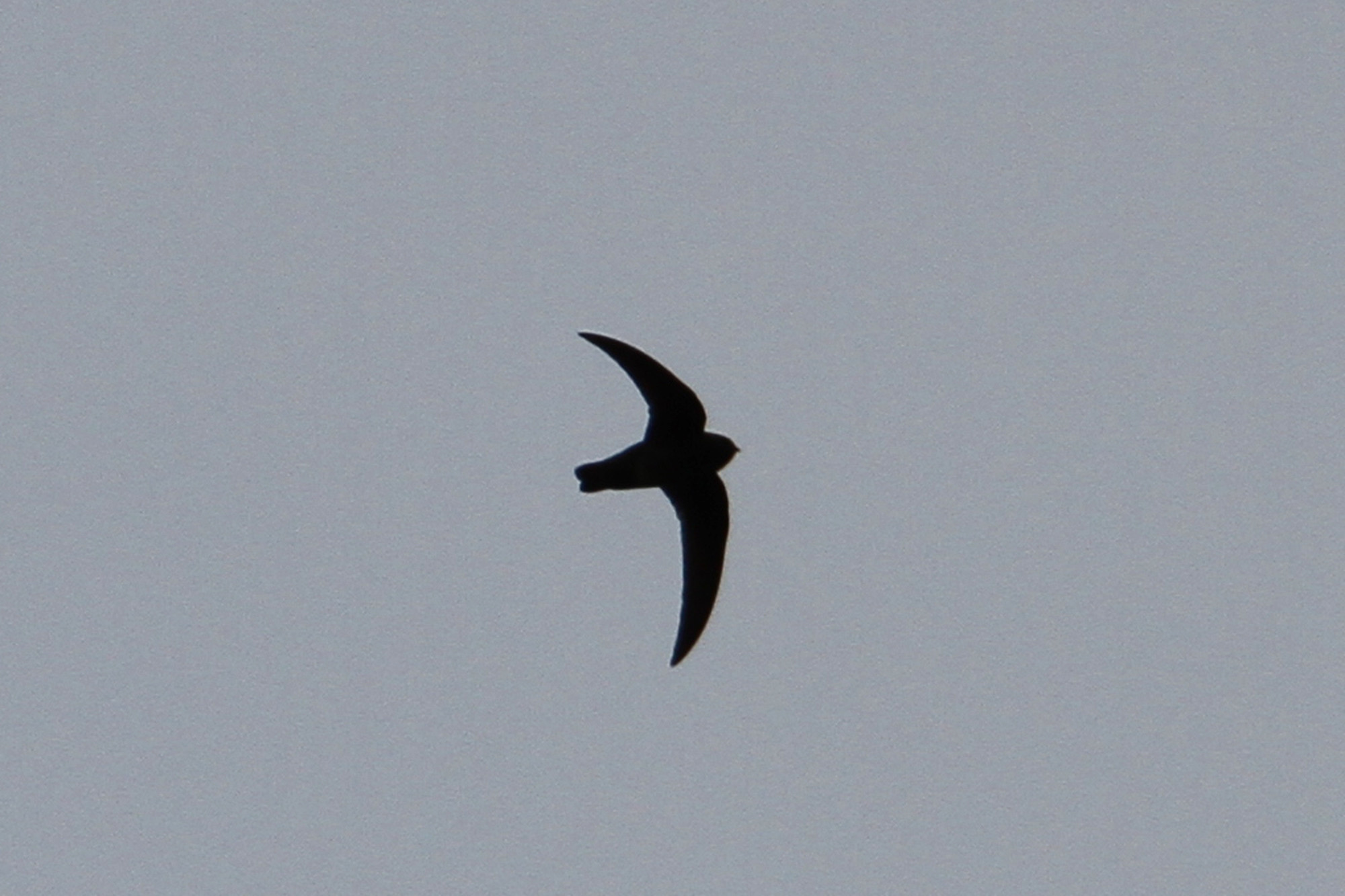
The black swift (Cypseloides niger) is a uniquely adapted aerial bird that breeds in western North America and spends most of its life on the wing, feeding on flying insects high above the landscape. Recognizable by its largely black plumage, streamlined body, long pointed wings, and notched tail, the black swift is one of the most enigmatic birds of Canada’s skies.
Appearance and behaviour
Black swifts are medium-sized swifts, averaging about 18 cm in length. They are expert fliers, often seen high in the air foraging on flying insects. Unlike many other birds, they rarely land on the ground outside of nesting. Their long, narrow wings and tail allow for fast, agile flight while feeding on the wing.
Habitat and nesting
In Canada, the black swift’s breeding range includes south, central, and northwestern British Columbia and southwestern Alberta. The species nests in highly specialized habitats—typically on cliff faces or in narrow canyons near waterfalls or moist rock ledges. Flowing water appears to be a key feature of nesting sites, likely because it supports reliable insect prey and provides protection from predators. Many nest sites are extremely remote and difficult to access.
Reproduction and life history
Black swifts have an unusually low reproductive rate compared to many other birds. They typically lay a single egg per year, and the chick remains in the nest for a long fledging period. This slow reproductive strategy means populations recover slowly from declines. Pairs may form long-term bonds, though recent research suggests mate changes can occur.
Population and status
Canada supports a significant portion of the global black swift population, with estimates suggesting that as much as 80% of the world population breeds in Canada. Despite this, long-term monitoring indicates substantial declines. Canadian populations are estimated to have decreased by more than 50% since the 1970s.
The black swift is listed as Endangered under Canada’s Species at Risk Act and has been assessed as Endangered by the Committee on the Status of Endangered Wildlife in Canada (COSEWIC). Its dependence on specialized nesting habitat and low reproductive output contribute to its vulnerability.
Threats and conservation
The causes of black swift declines are not fully understood, but changes in insect availability linked to climate change are believed to be a major factor. Alterations to water flow at waterfalls and in canyon systems may also affect nesting habitat suitability. Because nest sites are difficult to locate and monitor, conservation efforts rely heavily on protecting known nesting areas and improving knowledge of the species’ ecology.
Ongoing research, careful stewardship of waterfall and canyon environments, and monitoring of breeding sites are key to supporting the long-term conservation of the black swift in British Columbia and across Canada.
Community science also plays an important role. Observations shared through platforms such as eBird and iNaturalist help improve understanding of black swift distribution, contributing valuable information for conservation planning. Currently, there are 5 black swift observations within the Thompson-Nicola documented on iNaturalist.
Learn More
Feature image: Black swift (Cypseloides niger) © Jamie Chavez, licensed under CC BY-NC, via Flickr.