
Thompson-Shuswap Salmon Ecosystem Action Plan Now Published
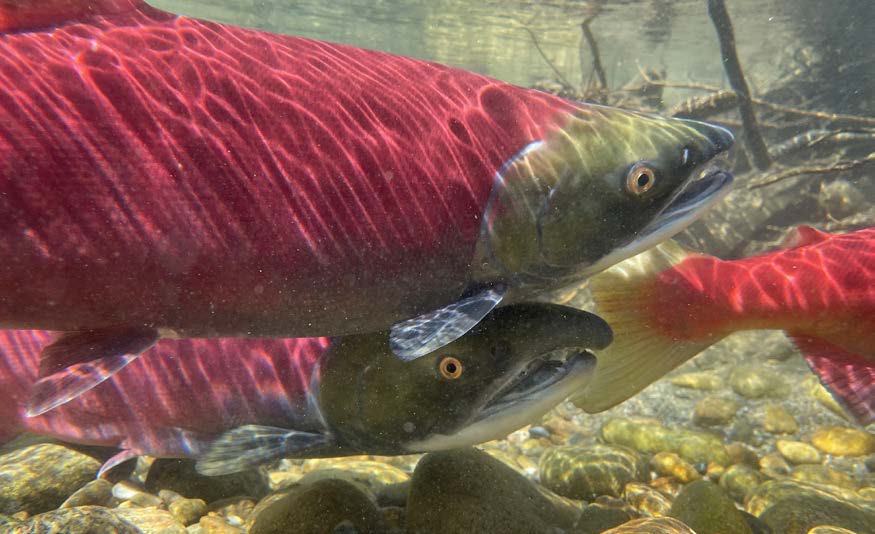
Salmon are vital to ecosystems, culture, and communities, yet they face unprecedented challenges. In the Thompson-Shuswap, 12 salmon populations are now considered at risk by the Committee on the Status of Endangered Wildlife in Canada (COSEWIC). After four years of work, the Thompson-Shuswap Salmon Ecosystem Action Plan and the Thompson-Shuswap Watershed Profile have been published as a collaborative roadmap to improve outcomes for salmon and their freshwater ecosystems in the Thompson-Shuswap region.
Read the plan: Action Plan | Watershed Profile
The plan was prepared by the Thompson-Shuswap Salmon Collaborative (TSSC), a partnership between the Secwépemc Fisheries Commission (SFC), Fisheries and Oceans Canada (DFO), and the BC Ministry of Water, Land and Resource Stewardship (WLRS).
A call to action
The Action Plan is a call to action for everyone who works, lives, or plays in the Thompson-Shuswap to unite in a shared responsibility for better outcomes for salmon. It is the culmination of four years of dedicated work, drawing on local knowledge, scientific expertise, innovative modelling, and extensive engagement with local experts, practitioners, and community members throughout the region.
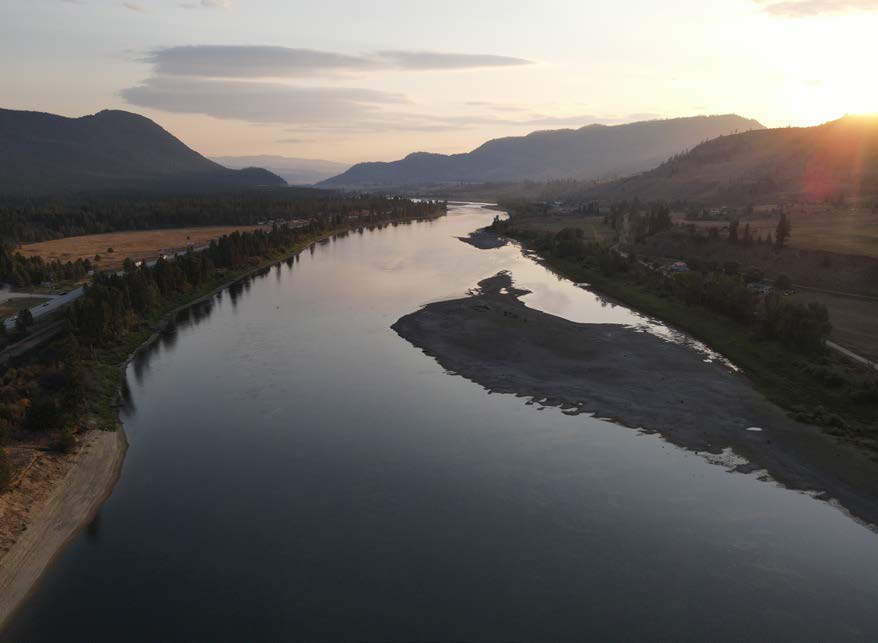
South Thompson River. Photo credit: SFC.
What is in the plan
The Action Plan unites efforts under six shared goals
- increasing the quantity, quality, and diversity of aquatic habitat
- improving habitat connectivity
- safeguarding water quality
- safeguarding flows
- strengthening relationships with salmon
- improving knowledge and coordination within the salmon community
It prioritizes site-specific actions for 19 focal waterbodies and introduces 18 cross-cutting actions to address challenges across the watershed. These include advancing area-based conservation designations, embedding salmon values in planning processes, fostering partnerships with landowners, expanding education programs, improving data access, and implementing hydrology solutions such as upslope restoration, watershed planning tools, and expanded monitoring networks. Several key knowledge gaps are also identified, along with proposed next steps.
Implementation will rely on multi-partner collaboration, First Nations leadership, and adaptive review cycles. As the plan is carried out, TSSC will strive to convene partners, coordinate actions, and track progress.
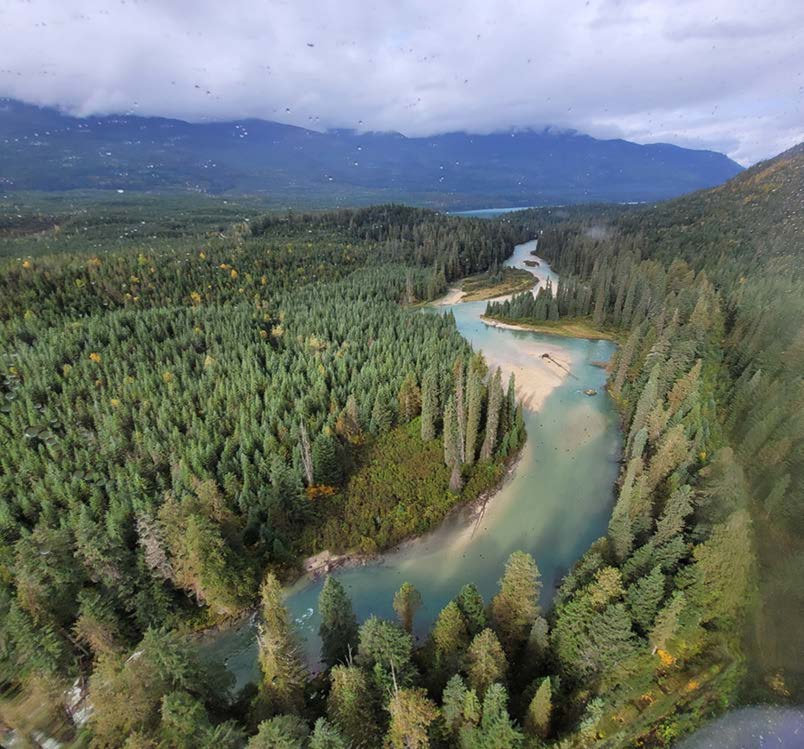
Upper Adams River. Photo Credit: SFC.
About the Watershed Profile
The Thompson-Shuswap Watershed Profile is a foundational resource for the Action Plan. It covers four species of Pacific salmon (Chinook, coho, sockeye, and pink) and steelhead trout, and summarizes their conservation status, life histories, freshwater habitat requirements, and key threats. It is organized by major watershed (the Thompson River, South Thompson River, and North Thompson River) and also describes 14 watershed groups, outlining salmon populations, key habitat features, and stressors such as altered hydrology, riparian loss, barriers to fish passage, and invasive species. The Profile also examines anthropogenic stressors and presents climate projections. It closes by highlighting recent stewardship and restoration initiatives led by Secwépemc communities, governments, and others.
Thank you
TSSC extends its thanks to everyone who took part in workshops, shared insights, and contributed knowledge to shape the plan.
Learn more
- Thompson-Shuswap Salmon Ecosystem Action Plan
- Thompson-Shuswap Watershed Profile
- Thompson-Shuswap Salmon Collaborative: thompsonshuswapsalmon.org