
In Our Backyard: Fisher
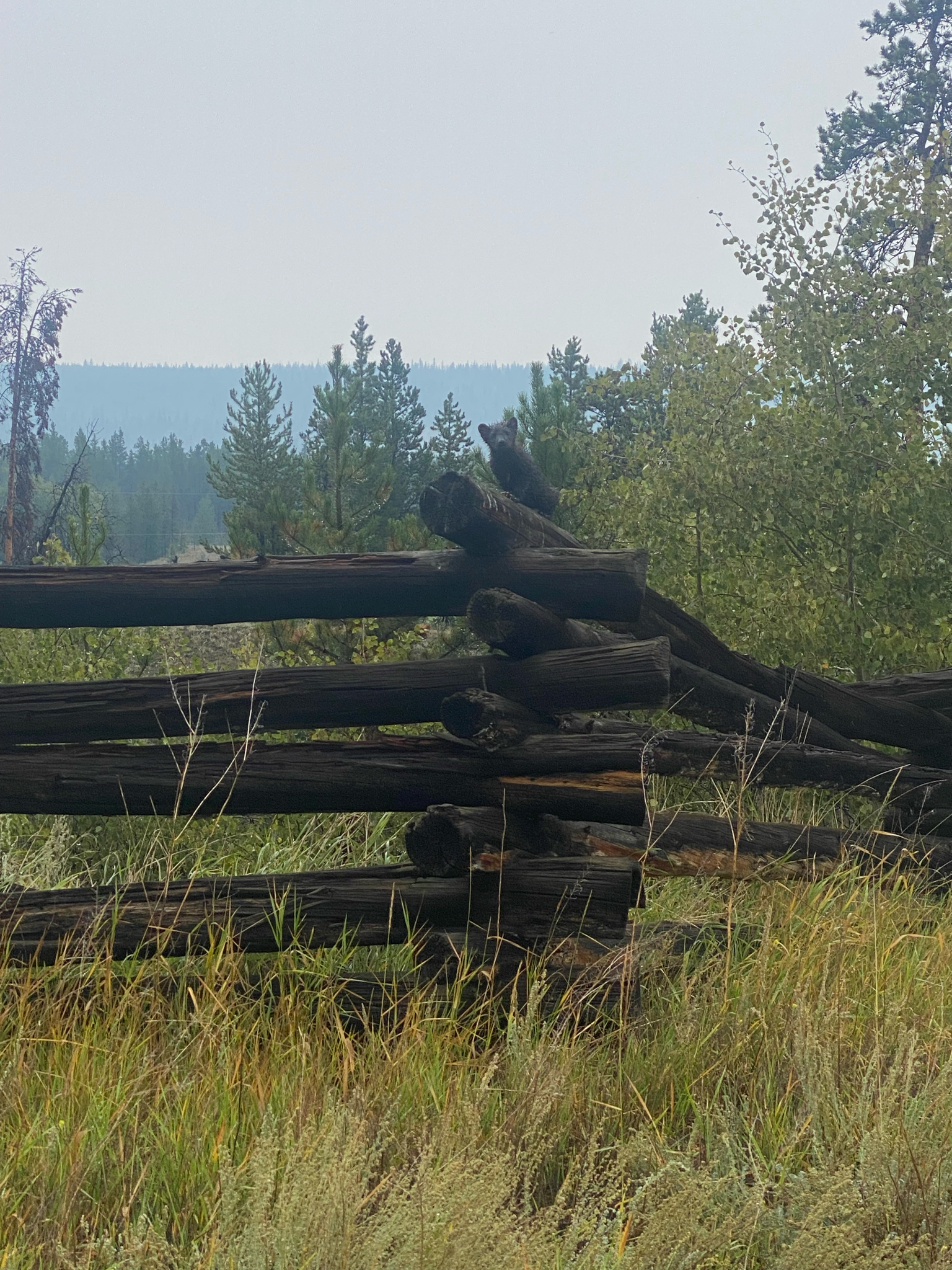
The fisher (Pekania pennanti) is a member of the weasel family, with short legs, large feet, large ears, and brown fur that can look black from a distance. It lives in forests, mostly older coniferous stands with closed canopies, where it hunts small mammals and scavenges for food.
In British Columbia, fishers are divided into two populations: the Boreal population in the northeast and the Columbian population in the central interior. The Columbian population is the more seriously at risk. It was added to the province’s red list when the BC Conservation Data Centre first assessed it as a separate population in 2020, and the Centre now ranks it as critically imperiled to imperiled (S1S2).
Distribution
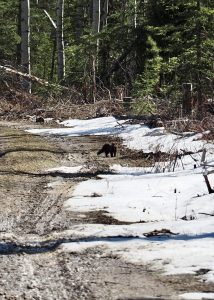
Credit: Kaitlyn Kuzma-Wells, CC BY-NC, via iNaturalist
The Columbian population lives in forests at low to moderate elevations across the central interior. According to the Conservation Data Centre, fishers still occupy suitable landscapes in the Cariboo, Skeena, and Omineca natural resource regions. Further south, the picture is very different. Fishers have disappeared from 32,505 square kilometres of their former range, mostly in the Southern Interior, including the Okanagan Shuswap, the southern parts of the Cascades and Thompson Rivers natural resource districts, and the Kootenay-Boundary. The Centre says the population has been lost from most of the Shuswap, Okanagan, Columbia, and Kootenay regions, and an effort to bring fishers back to the East Kootenay was not successful. Today, fishers are rarely seen in the Southern Interior, though occasional observations are still reported on iNaturalist, including in the Thompson-Nicola and the Cariboo.
The Centre estimates that about 393 mature fishers remain in the Columbian population (within a range of 272 to 558): about 60 in the Cariboo, 202 in the Chilcotin, and 131 in the Omineca.
Fishers depend on features of older forests. Females den in unusually large black cottonwood, trembling aspen, Douglas-fir, or lodgepole pine trees, and they also use older forest for resting.
Threats
The Centre rates the threat to the Columbian population as high to very high. The primary threats are trapping, forest harvesting, and wildfire. The fisher trapping season has been closed since 2021, but regulations still allow fishers to be caught incidentally in traps certified for other species. The Centre reports that these incidental catches are killing fishers faster than the population can replace them.
Loss of habitat is the other major threat. Forest harvesting, including salvage logging after wildfires and mountain pine beetle outbreaks, and wildfire itself are shrinking the amount of forest that can support healthy fisher populations. Between 2017 and 2023, nearly one-quarter of fisher habitat in the Columbian range was logged or burned. Livestock farming and ranching, transportation, and mining add further pressure.
Fishers are also slow to rebound. Columbian fishers produce about 0.92 kits per breeding season, much fewer than Boreal fishers, and the survival rate for adults and sub-adults is estimated at 0.74. The Centre reports a decline of more than 70% and estimates that, without changes to trapping regulations and forest management, the population would disappear within a decade.
Conservation
Conservation measures focus on trapping and habitat. Fisher exclusion devices, which help keep fishers from being caught in traps set for other species, have been widely distributed in the central interior, but using them isn’t required.
On the habitat side, the Centre says fishers need to be considered at two scales: individual forest stands and whole landscapes. Voluntary guidance is available for managing stands, but it only works if it’s applied consistently. For landscapes, tools such as the Fisher Landscape Explorer can help identify and prioritize habitat for protection and restoration. Both kinds of guidance are meant to be built into Forest Landscape Plans where they overlap fisher range.
So far, there are four approved fisher Wildlife Habitat Areas, totalling 44 square kilometres, all in the Omineca region.
Some interim measures have been tried within fisher range, including fisher den boxes and the inoculation or mechanical treatment of trees. Few fishers have used the den boxes and tree treatment has been slow, so the Centre calls for these methods to be re-evaluated between 2025 and 2028.
Genetic and camera trap surveys are also under way to better estimate fisher density and trends. The first year of a three-year survey plan was completed in 2025.
A 2025 study in the Journal of Wildlife Management concluded that recovery may depend on both reducing trapping deaths and protecting the best denning and resting habitat.
Learn More
- BC Conservation Data Centre: Conservation Status Report, Fisher – Columbian Population
- BC Species and Ecosystems Explorer: Fisher
- BC Fisher Habitat Working Group
- Journal of Wildlife Management: Forestry, fire, and fur: factors influencing densities of endangered fishers in central British Columbia
- E-Fauna BC: Fisher
Featured image credit madi, CC BY-NC, via iNaturalist